The oven is the most avoided cleaning job in the British kitchen, and the most inspected item at any end of tenancy check-out. Burnt-on grease does not just look bad: it smokes at high temperatures, taints the flavour of food, and makes the oven work harder to hold its temperature. The longer it is left, the harder it gets, because every cooking session bakes the old grease on a little more.
Here is the part most people get wrong: you do not need caustic sprays to get a clean oven. A baking soda paste, some patience and the right order of work will shift months of build-up without filling your kitchen with fumes. This guide covers the full method, the racks, the door glass, and when the job is better handed to a professional.
What You Need
- Baking soda (bicarbonate of soda) — around half a cup for a standard oven
- White vinegar in a spray bottle
- Washing-up liquid
- Rubber gloves
- A plastic or silicone spatula for scraping
- Non-scratch scouring sponges and microfibre cloths
- Old towels or newspaper to protect the floor
- A bathtub or large container for soaking racks
Nothing on this list is caustic, which means no gloves-and-goggles chemistry and no lingering chemical smell in an oven you cook food in.
How to Clean an Oven with Baking Soda
- Empty the oven. Remove the racks, trays, thermometer and anything else inside. Set the racks aside — they get their own treatment below.
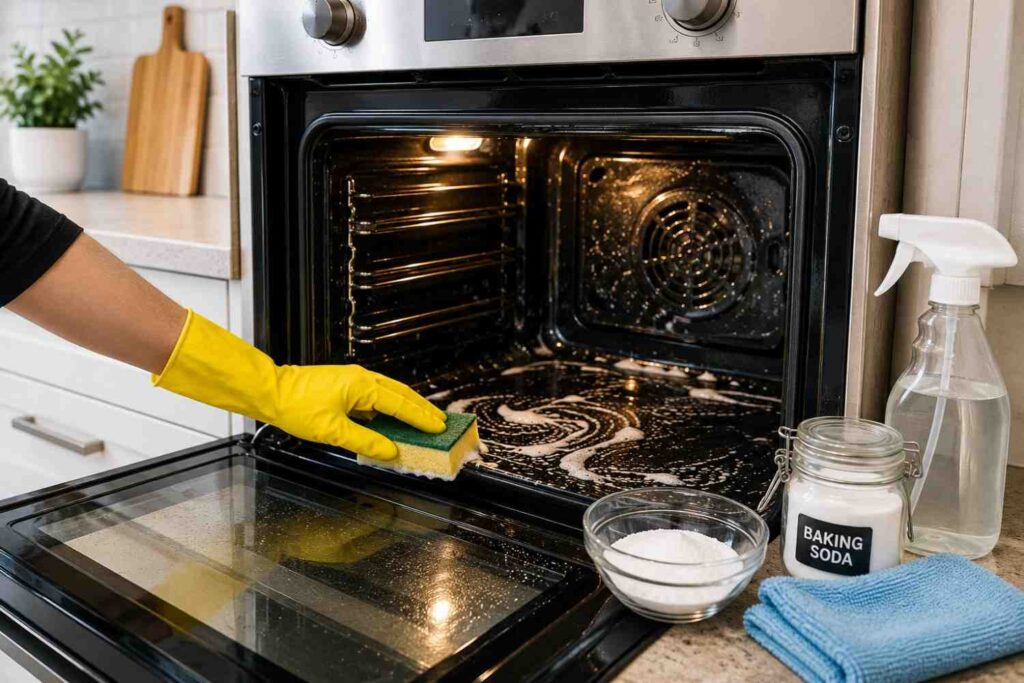
- Make a paste. Mix half a cup of baking soda with two to three tablespoons of water until it forms a spreadable paste.
- Coat the interior. Wearing gloves, spread the paste over every internal surface, avoiding the heating elements and the fan. On greasy patches it will turn brown immediately — that means it is working.
- Leave it overnight. The paste needs at least 8–12 hours to break down the grease. This step is where the method succeeds or fails, so do not rush it.
- Wipe out. Next day, wipe the dried paste out with a damp cloth. Use the plastic spatula to lift softened deposits from corners.
- Spray with vinegar. Mist any remaining white residue with white vinegar; it will foam gently, loosening the last of the paste. Wipe again with a clean damp cloth until the surfaces come away spotless.
- Do the door. Apply the same paste to the inside of the door glass, leave it for 30 minutes, then wipe. For grease trapped between the panes of glass, check your manual — many oven doors open up for cleaning via screws along the bottom edge.
How to Clean Oven Racks
Racks are easiest cleaned in the bath. Lay an old towel in the tub to prevent scratches, place the racks on top, and cover them with hot water and either a generous squirt of washing-up liquid or one dissolved dishwasher tablet. Leave them to soak for at least two hours, or overnight for heavy build-up.
After soaking, most residue wipes away with a non-scratch sponge. Stubborn spots respond to a paste of baking soda scrubbed along the bars. Rinse, dry, and only return the racks to the oven once the interior is finished.
Self-Clean Function: Is It Safe?
Pyrolytic self-cleaning ovens heat to around 400-500°C, incinerating grease to a fine ash you sweep out afterwards. Used as the manufacturer intends, the function is safe, but there are sensible precautions. The oven gets extremely hot outside as well as inside, so keep children and pets out of the kitchen and ventilate well, as the process can produce smoke and strong smells from burning residue. Remove the racks first unless the manual says otherwise, because the extreme heat can discolour them.
Two caveats worth knowing. Bird owners should be cautious: fumes from self-clean cycles are known to be harmful to birds, so keep them well away from the kitchen. And a heavily soiled oven can smoke dramatically on a self-clean cycle — if the oven is thickly coated, clean the worst off manually first.
When to Call a Professional
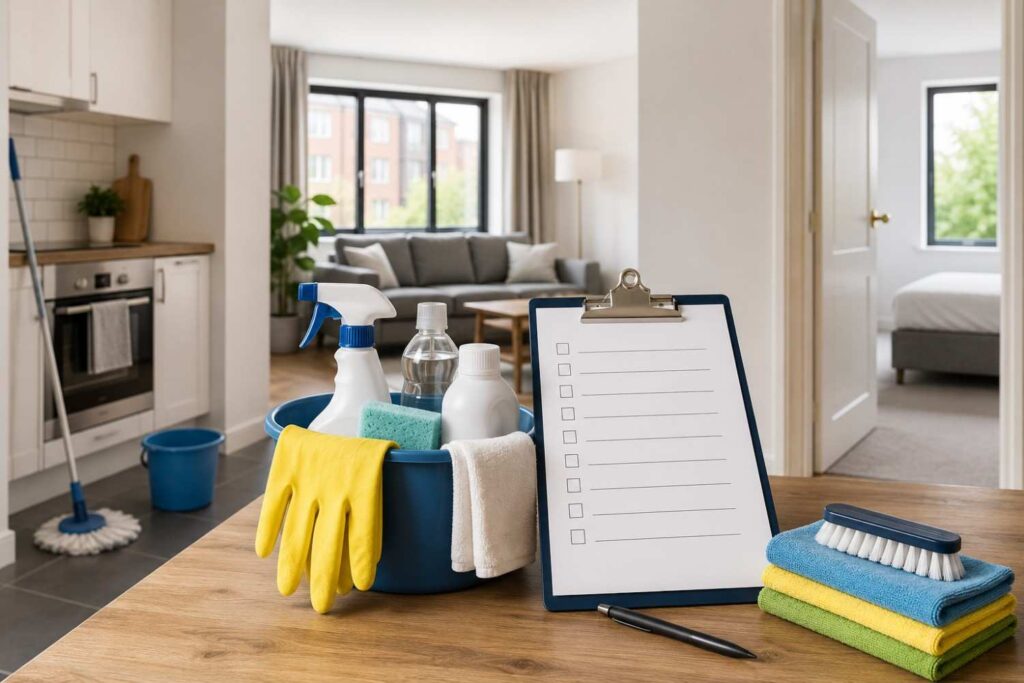
Some jobs sit beyond a home clean: grease carbonised into a black glaze after years of cooking, a door that needs dismantling to reach between the glass, fan covers and elements that require removal, or an end of tenancy inspection where the result has to be flawless. Read more: End of Tenancy Cleaning Checklist.
A professional oven clean uses a dip-tank system: removable parts are soaked in heated tanks of specialist solution while the technician deep cleans the shell, door and glass. The result is close to showroom condition in around one to two hours, with no caustic residue left in the oven. At Eco-Fresh we clean ovens across Croydon and London as a standalone service or as part of a full kitchen deep clean.
FAQ
How often should I clean my oven?
Wipe spills as soon as the oven is cool, give it a light clean monthly, and deep clean every three to six months depending on use. A professional clean once or twice a year keeps even a busy family oven in good condition.
Is the self-clean function safe to use?
Yes, when used according to the manual: ventilate the kitchen, remove the racks, and keep children and pets away during the cycle. Avoid running it on a heavily soiled oven, which can produce a lot of smoke.
How long does a professional oven clean take?
Typically one to two hours for a standard single oven, and up to three hours for a range cooker or heavily soiled double oven. The oven can be used again as soon as the technician finishes.
What's the easiest way to clean burnt-on grease?
Baking soda paste left overnight, then a vinegar spray and a plastic scraper. The overnight dwell time does the hard work; scrubbing without it is what makes the job feel impossible.
Can I use dishwasher tablets to clean my oven?
Yes, for the door glass and racks. Dip a tablet in warm water and rub it directly over the glass — the enzymes cut grease effectively. For racks, dissolve a tablet in hot water and soak. It is less practical for the oven interior, where a paste stays in place better.
Get a Showroom-Clean Oven Without the Scrubbing
If the overnight-paste routine sounds like a weekend you would rather have back, let our technicians do it in a single visit — no caustic chemicals, no mess, ready to cook the same day.
Book a professional oven clean with Eco-Fresh — vetted local specialists serving Croydon and London seven days a week. Book online or call +44 7490 854 937.
Read more: Oven Cleaning in Croydon | Deep Cleaning in London | End of Tenancy Cleaning in Croydon
A deep clean goes beyond regular dusting to eliminate hidden grime, allergens, and bacteria from every corner of your home. Professional cleaners meticulously scrub skipped areas like baseboards, inside appliances, and light fixtures. This comprehensive process sanitises your living space, improves indoor air quality, and protects your family’s health. Investing in a professional deep clean saves you valuable time and physical effort.